




IoT-Enabled Strapping Machines: Are They Worth the Investment?
- Views:0
- Author:Packaging
- Publish Time:2026-04-17
- Origin:site
Analyzing ROI for Smart Packaging Equipment
The industrial packaging landscape is rapidly evolving with Industry 4.0 technologies. Among the most significant innovations are IoT-enabled strapping machines—intelligent systems that collect, analyze, and act on operational data in real time. But are these smart strapping machines worth the investment? This ROI analysis examines the costs, benefits, and measurable returns of connected strapping technology.
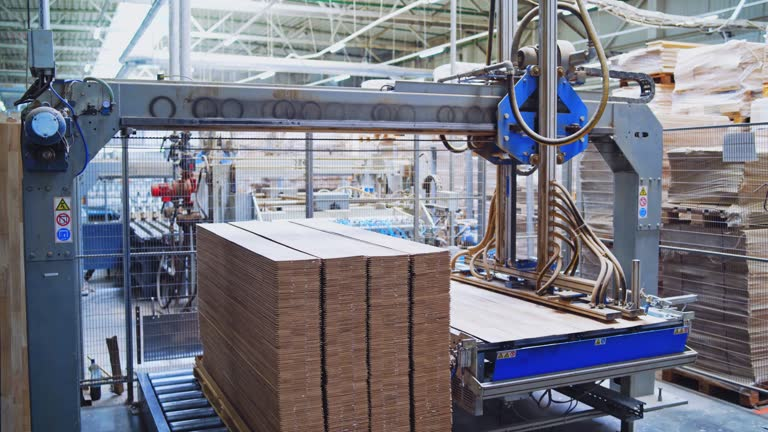
What Makes Strapping Machines "IoT-Enabled"?
Traditional strapping machines operate independently, requiring manual monitoring and intervention. IoT-enabled strapping machines feature embedded sensors, connectivity modules, and cloud-based analytics platforms. These smart strapping machines track real-time metrics: cycles per minute, strap tension consistency, seal quality, material consumption, and predictive maintenance alerts. All data flows to centralized dashboards accessible from any connected device.
Quantifying the ROI: Hard Savings
A 500,000-square-foot distribution center provides real-world data. Before upgrading, the facility operated 12 conventional strapping machines producing 15,000 strapped pallets daily. Annual costs included $47,000 in unplanned repairs, $31,000 in overtime labor for troubleshooting, and $28,000 in strap waste from inconsistent tension.
After installing IoT-enabled strapping machines, results over 12 months showed: unplanned repairs decreased 73% to $12,700, overtime labor dropped 82% to $5,600, strap waste reduced 45% saving $12,600, and productivity increased 12% adding $156,000 in throughput value. Total annual hard savings: $229,500. The premium for IoT-enabled strapping machines compared to conventional units was $84,000. Payback period: 4.4 months.
Predictive Maintenance: The Game Changer
The most valuable feature of IoT-enabled strapping machines is predictive maintenance. Sensors monitor wear components: sealing heaters, cutting blades, feed wheels, and motor bearings. When parameters deviate from baseline, the system alerts maintenance teams before failure occurs. One food manufacturer using smart strapping machines reduced emergency service calls from 18 to 3 annually—each emergency call previously costing $2,500 in technician fees plus $4,000 in production downtime. Predictive maintenance alone saved $37,500 annually across their strapping machines fleet.
Real-Time Tension Optimization
Inconsistent strap tension plagues conventional strapping machines, causing both load failures (too loose) and product damage (too tight). IoT-enabled strapping machines continuously monitor tension and adjust automatically. A case study from a beverage company showed tension variation across conventional strapping machines averaged ±18%. After upgrading to smart strapping machines, tension variation dropped to ±3%. This consistency reduced customer damage claims by 62% and eliminated product crushing complaints entirely.
Data-Driven Continuous Improvement
Beyond immediate savings, IoT-enabled strapping machines generate data for ongoing optimization. Heat maps show which production lines experience frequent jams. Trend analysis identifies optimal strap tension for different product types. Material consumption reports reveal opportunities to negotiate better strapping roll pricing. One logistics provider used six months of data from their smart strapping machines to renegotiate supplier contracts, achieving 11% lower strapping costs based on documented volume commitments.
Operator Efficiency Gains
Smart strapping machines reduce operator dependency through automated diagnostics. When issues occur, the machine displays specific error codes with repair instructions. One facility reduced average troubleshooting time from 23 minutes to 7 minutes per incident across their strapping machines. Over 200 annual incidents, this saved 53 operator hours. Additionally, training time for new operators dropped from 4 hours to 90 minutes because smart strapping machines provide on-screen guidance.
Connectivity and Integration Benefits
IoT-enabled strapping machines integrate with warehouse management systems (WMS) and manufacturing execution systems (MES). This integration enables automated job changeovers—when the WMS signals a product change, strapping machines automatically adjust tension and strapping pattern. A cross-dock facility achieved 15-minute reduction in changeover time per shift, adding 1.5 hours of productive strapping daily across their strapping machines fleet.
Potential Drawbacks to Consider
IoT-enabled strapping machines require robust network infrastructure. Facilities without reliable Wi-Fi or Ethernet coverage may experience connectivity issues. Cybersecurity becomes a consideration—connected strapping machines should be isolated on production networks with proper firewalls. Initial staff training is necessary to leverage analytics platforms effectively. However, for medium and large operations, these requirements represent modest investments compared to the documented returns.
Which Operations Benefit Most?
IoT-enabled strapping machines deliver strongest ROI for facilities with: high-volume strapping exceeding 10,000 cycles daily, multiple strapping machines requiring centralized monitoring, expensive downtime costs exceeding $500 per hour, complex product mixes requiring frequent tension changes, and quality-sensitive applications where strap consistency directly impacts customer satisfaction. Small operations with one or two strapping machines running limited hours may find conventional equipment sufficient.
Future-Proofing Your Investment
As Industry 4.0 standards evolve, IoT-enabled strapping machines offer upgrade paths that conventional machines lack. Firmware updates add new features. Integration with emerging technologies like digital twins and augmented reality maintenance is already available. Choosing smart strapping machines today positions your facility for the next decade of packaging innovation.
IoT-enabled strapping machines deliver compelling ROI for most medium and high-volume operations. Hard savings from reduced repairs, lower material waste, and improved productivity typically recover the premium investment within 4-8 months.
To explore our range of smart strapping machines and request a personalized ROI analysis for your facility, please visit our website at www.strappackage.com. For technical specifications and implementation guidance, contact us at winnie@adtooo.com. Our team is ready to help you evaluate whether IoT-enabled strapping machines are the right investment for your operation.





