




How to Adjust Strapping Machine Tension for Fragile Loads
- Views:0
- Author:Packaging
- Publish Time:2026-02-26
- Origin:site
Too tight = crushed goods. Too loose = collapsed pallets. Here is the Goldilocks zone.
Lightweight e-commerce boxes. Thin-walled PET bottles. Slimmed-down cartons. These products did not exist on pallets ten years ago. Now they are half your volume.
But most operators still tension glass like it is granite. Then wonder why corners cave.
Here is the field manual for fragile loads—no guesswork required.
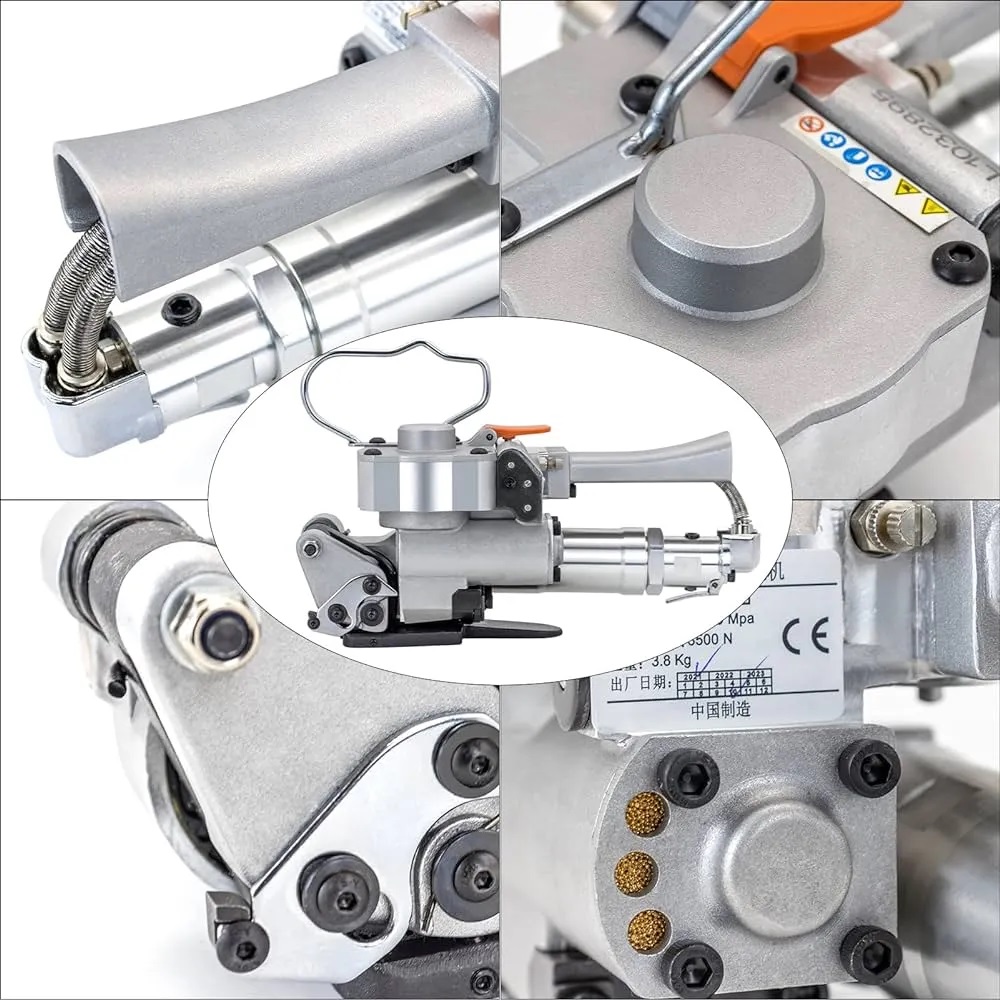
Step 1: Find the Dial. Turn It Left.
Counterclockwise = less tension. Clockwise = more.
This is not complicated. Yet operators consistently over-tighten because "tighter feels safer."
Truth: For corrugated cartons, electronics, or thin-walled goods, moderate tension outperforms max tension every time. Over-tensioning whitens cardboard, buckles sidewalls, and invites customer returns.
Start at 30–40% of max. Run a test. Observe.
Step 2: Watch for the "Crush Signal"
Your product tells you when tension is too high:
Whitening or indentation on cartons
Visible waist-banding on PET bottles
Strap digging into corners
Product bows outward between straps
If you see any of these, back off 2–3 clicks and test again.
Real case: A beverage plant switched from PP to PET strapping but kept the same tension setting. Result? Broken straps, toppled pallets, $12,000 in destroyed product in one week. The strap wasn't the problem—the tension setting was.
Step 3: Understand the Material Difference
Polypropylene creeps. It relaxes over time. Operators often overtension PP deliberately, knowing it will loosen.
Polyester (PET) does not creep. It retains tension.
This means: You can run PET at lower initial tension and still arrive tight. For fragile loads, this is the difference between intact and inbound-to-claims.
Step 4: Calibrate by Product, Not Guesswork
Stop adjusting by "feel." Start logging.
Best practice: Create parameter cards by SKU.
Light cartons (under 10kg): Tension 3, Heat 4, Cool 3
Electronics, paper goods: Tension 2.5, Heat 3.5, Cool 4
Bottles, cans, compressible loads: Tension 2, Heat 4, Cool 4
Post these at the station. Operators should not be reinventing tension every shift.
Step 5: Test the Joint. Bend It.
After adjusting tension, always validate.
The 3-second test:
Remove the strapped sample
Bend the seal backward
If it peels apart—increase cool time, not tension
Weak joints are almost never fixed by pulling harder. Fix the weld, not the force.
Step 6: When to Call for Backup
If your machine delivers wildly different tension on identical settings, components are worn.
Worn tension wheels = slippage = inconsistent pull
Glazed gripper plates = can't hold = loose straps
Aging motor controllers = drift = unpredictable output
This is not operator error. This is maintenance debt. And it costs you 40% of unplanned downtime .
The Fragile Load Formula
Lower tension + PET strap + Verified cool time = Intact arrival.
You do not need brute force to secure delicate goods. You need precision, consistency, and the right machine settings.
Still crushing corners? Still chasing loose loads?
Visit: www.strappackage.com
Email: winnie@adtooo.com
We supply machines and PET strapping engineered for retention—not over-tension. Call us. We will walk you through the dial.





